

I want to talk about buyer trust in the age of automated funnels.
Not because anyone is doing anything especially evil. Most of the people running webinar funnels and LinkedIn nurture sequences are well-intentioned. They built the system the way the playbook said to build it. Connect, invite, remind, replay, reminder, replay, soft pitch, paid pitch, "are you facilitating virtual events?" question. The mechanics work. The platforms reward them. The numbers move.
The thing the playbook doesn't account for is what it feels like to be on the receiving end.
The buyer-side experience
Picture the most ordinary version of this. You connect with someone on LinkedIn. They invite you to a free webinar. You register. You don't make it live. They send the replay. A few weeks later, another free webinar. You register again. A reminder. A "hope to see you there." Eventually a paid workshop drops in your inbox — fifty bucks, ninety minutes, a guest expert you've never heard of.
You ask a fair question. What am I getting for the fifty dollars, and why should I trust this person as a leader in this space?
The answer comes back referencing the length of the connection. We've been connected for almost two years, and you've registered for several of my events.
That sentence is where it goes sideways — not because it's mean, but because it confuses two very different things. Time on a list is not the same as a relationship. Registering for a free thing is not the same as buyer readiness. And being polite enough to write "Thanks!" back when someone sends you a Zoom link is not the same as understanding the value of a paid offer.
Connection is not credibility. Attendance is not consent. A nurture sequence is not a relationship.

Why this matters more now, not less
We are entering a phase where AI can automate more of the sales process than ever — the invites, the segmentation, the reminders, the personalization, the follow-up, the "just checking in." Anyone who wants to can stand up a credible-looking funnel in a weekend. The bar to look like a thoughtful, organized seller is on the floor.
Which means the moments that are human have to do more work. Not less.
If a system can fake the appearance of intimacy with first-name fields and clever copy, then the genuinely human parts — the answer to a real question, the framing of a real offer, the willingness to say "this isn't right for you" — become the place trust is actually built.
Automation is fine. Automation is good, even. The problem isn't automation. The problem is when the automation has to do the work that only the human can do.
What buyers are actually asking

When someone asks "what am I getting for this money," they're not being difficult. They're asking the five questions every careful buyer asks, in compressed form:
- What is this? Concretely. The deliverables, the format, the length, the takeaway.
- Why this? Why this offer instead of the four other workshops in my inbox this week?
- Why you? Or why this guest expert? What's the credible reason this person should be the one teaching it?
- Why now? What changes after I do this thing? What's the use case for the version of me on the other side?
- Is this right for me? Specifically. Not for "founders" in the abstract — for someone in my actual situation.
Five questions. That's the whole thing. Most "what am I getting?" objections are the buyer asking all five at once and the seller hearing only one.
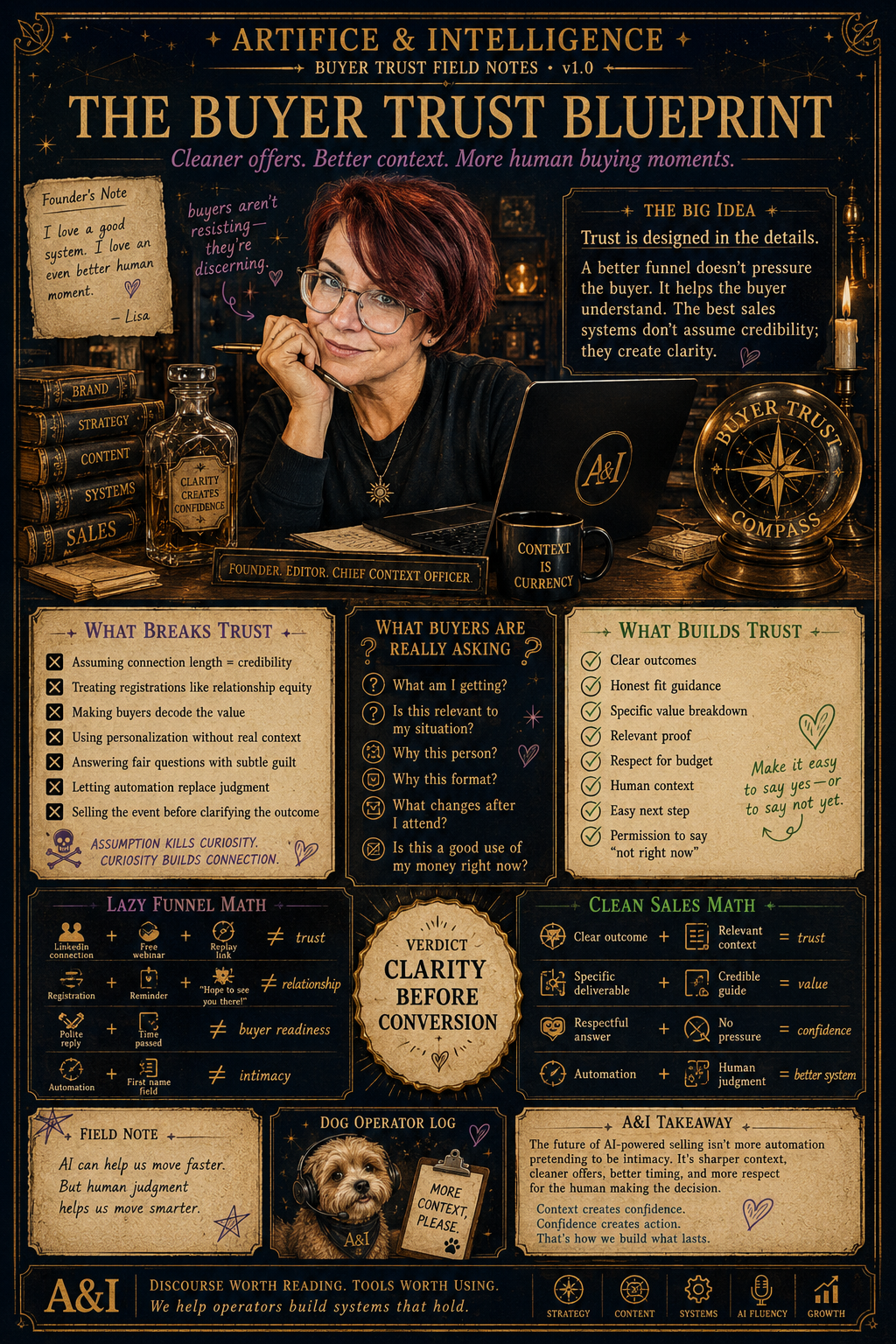
What lazy funnel math looks like
Lazy funnel math sounds like this:
- LinkedIn connection + free webinar + replay link ≠ trust
- Registration + reminder + "hope to see you there" ≠ relationship
- Polite reply + time passed ≠ buyer readiness
- Automation + first name field ≠ intimacy
None of those things are bad on their own. They're great. They're the connective tissue. They keep the conversation alive between the moments that matter. But they're connective tissue — they're not the relationship. They support a relationship; they don't replace one.
The mistake is treating the connective tissue like it did the heavy work.
What clean sales math looks like
The version that builds trust looks like this:
- Clear outcome + relevant context = trust
- Specific deliverable + credible guide = value
- Respectful answer + no pressure = confidence
- Automation + human judgment = a better sales system
The reason this version works is that it does the buyer's job for them. It removes the burden of decoding. It says, in effect: I respect you enough to make this obvious.
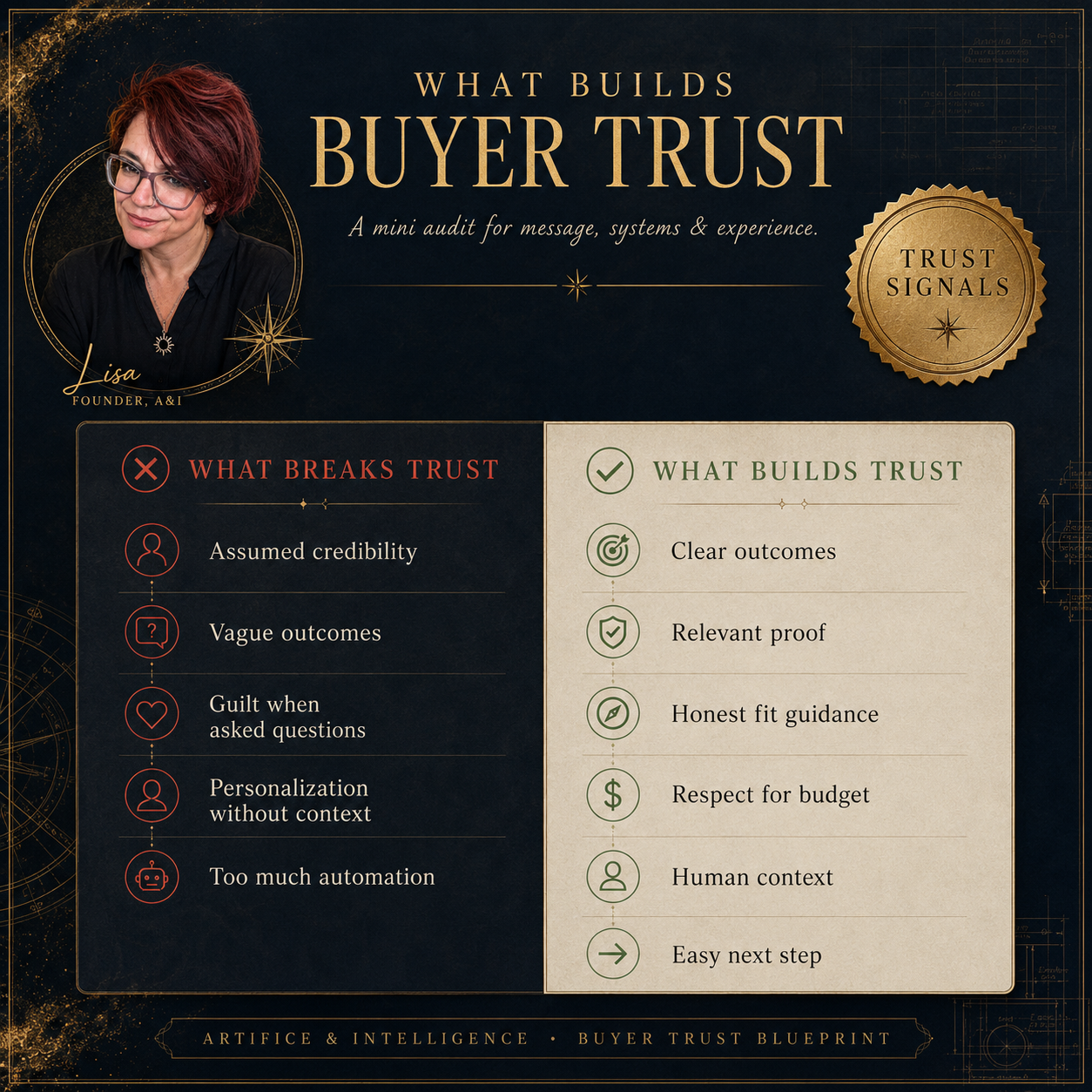
The clean response
If a buyer asks "what am I getting for $50?", a clean answer is something like:
Totally fair question. Here's what's included: 90 minutes live, one delivery framework, one resource you'll leave with, examples from George's speaking work, and a practical exercise. It's best for people actively running webinars, trainings, or sales calls. If that's not where you are right now, skip it — I'll point you at a free resource that's a closer fit.
That's the whole thing. Acknowledgment. What it is. Who it's for. What you walk away with. Why this guide is credible. Permission to say no.
Notice what isn't there. No subtle guilt. No "we've been connected for two years." No "I'm assuming this should be obvious by now." No leaning on the funnel to do the relationship's job.
That answer takes about ninety seconds to write. It works in DMs. It works in email. It works on a sales page. It works as the FAQ block on the registration form. The reason most sellers don't write it is not that they can't — it's that the funnel never made them.
The "skip this if" move
The single most underused sentence in modern selling is this isn't right for everyone, and here's who should skip it.
It feels counterintuitive. Sales playbooks are built around removing objections, not adding them. But "skip this if" does three useful things at once. It signals confidence in the product. It builds trust by showing you're not desperate for every dollar. And it pre-qualifies the buyer, so the people who do raise their hand are actually a fit.
Trust is not built by pretending every offer is perfect for every person. Trust is built when the seller is honest enough to say this may not be the right fit for you right now. That isn't bad sales. That's clean sales.

The A&I belief
At Artifice & Intelligence, we think the future of AI-powered selling is not more automation pretending to be intimacy. It's sharper context, cleaner offers, better timing, and more respect for the human making the decision.
AI can help you build better funnels. But if your funnel is replacing actual trust-building, your buyer can feel it. They can always feel it. They may not name it the way I just named it, but they will quietly close the tab.
The good news: the fix is small. It's not a new platform. It's not a bigger list. It's not a more sophisticated nurture sequence. It's the next message you send. It's the answer you give the next person who asks "what am I getting for this?" It's whether your offer page can survive a five-second scan from someone who has never heard of you.
Clarity is the new credibility. And clarity comes before conversion.
A small checklist before you send the next pitch
- What is the outcome, in one sentence, that the buyer can repeat back to a friend?
- Who is this for, in their language, not mine?
- Why am I (or my guest) credible for teaching this — not in the abstract, but for this specific topic?
- What does the buyer walk away with — the artifact, the framework, the next step?
- Who should skip it, and where would I send them instead?
- If a buyer asked "why now," can I answer in one sentence without leaning on urgency tactics?
If any of those answers are blurry, the offer isn't done yet. Don't send it.
And if a buyer comes back and asks the question anyway? Treat it as a gift. They cared enough to ask. That's not an objection to overcome. That's an invitation to be clear.
— L.