
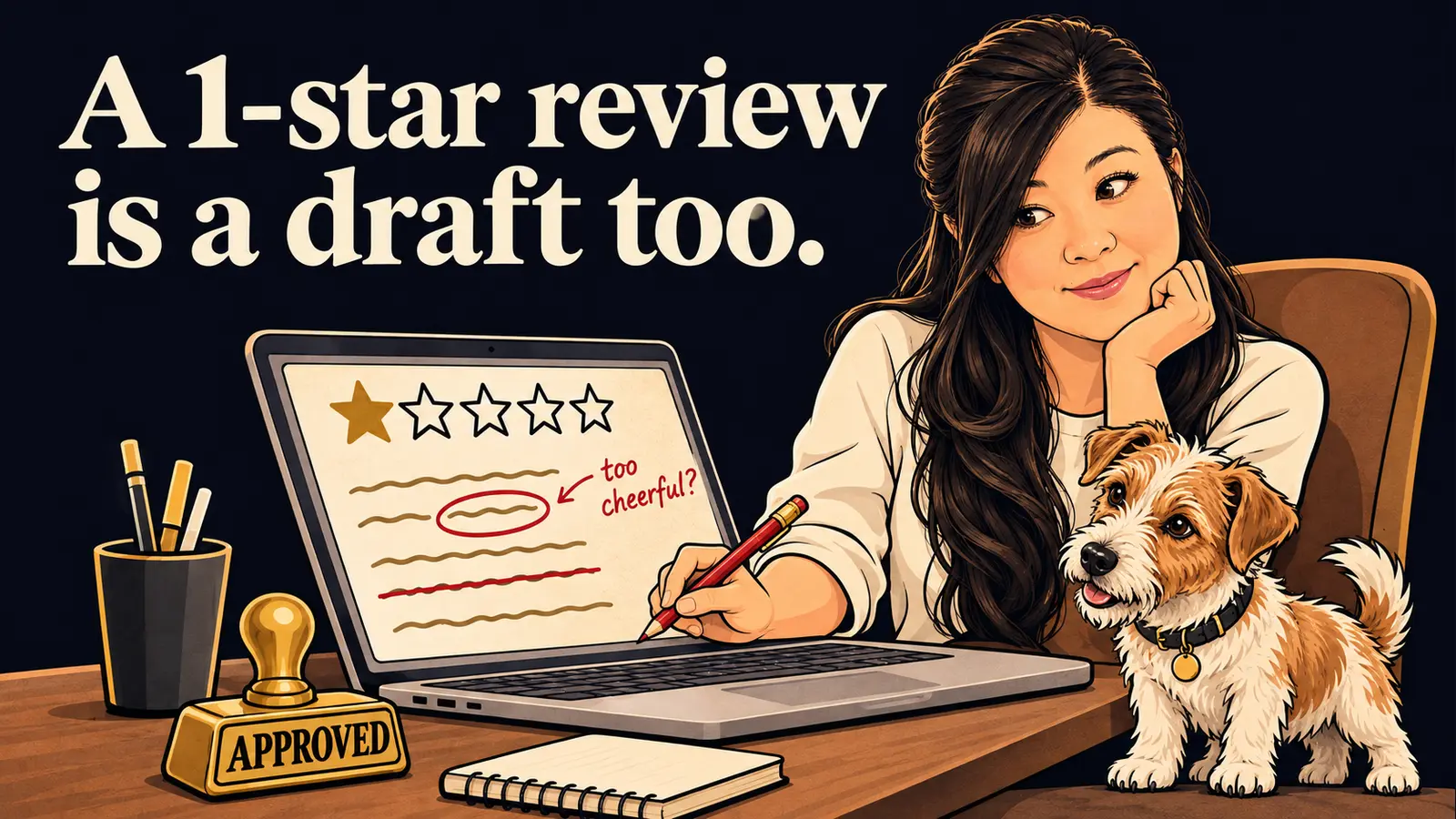
You’re writing to two people. The reviewer, and everyone who reads the review after them.
Reviews are riskier than blog drafts. A reply is public, it stays up, and it goes to someone who is upset.
Read twice, then reply. Find the real complaint, own your part and move the conversation somewhere private.
Use the checklist. Seven checks catch the small misses people notice first.
When you respond to negative reviews, you are writing to two people at once. One is the reviewer, and the other is everyone who reads the review after them.
A reply can also be faster than ever. This week we connected Agorapulse to Claude, which can read our comments, messages and reviews and draft a reply in seconds. That is when I slow down, because every reply still needs a person to approve it before it goes out. For reviews, that person is doing the most important part of the job.
Why a review reply is riskier than a blog draft
I edit AI-written blogs every month. A blog draft that is a little off gets fixed before anyone sees it. A review reply is different in three ways.
- It’s public. The reviewer reads it, and so does everyone who looks you up after them.
- It stays up. The reply sits under the review for as long as the review is there.
- It’s emotional. The person who wrote it was upset enough to write it, and a cheerful or canned reply makes that worse.
A blog post that is good can still be fine. A review reply that is good can still hurt you. Good isn’t ready.
How to respond to negative reviews, step by step
Read the review twice. The first read is for the feeling, and the second is for the actual complaint, which is often one sentence buried in the middle.
Then decide what it needs. Some reviews need a reply, some need a fix, and most need both.
A good reply does three things. It says what happened in plain words, it takes responsibility for the part that is yours, and it moves the conversation somewhere private where you can help.
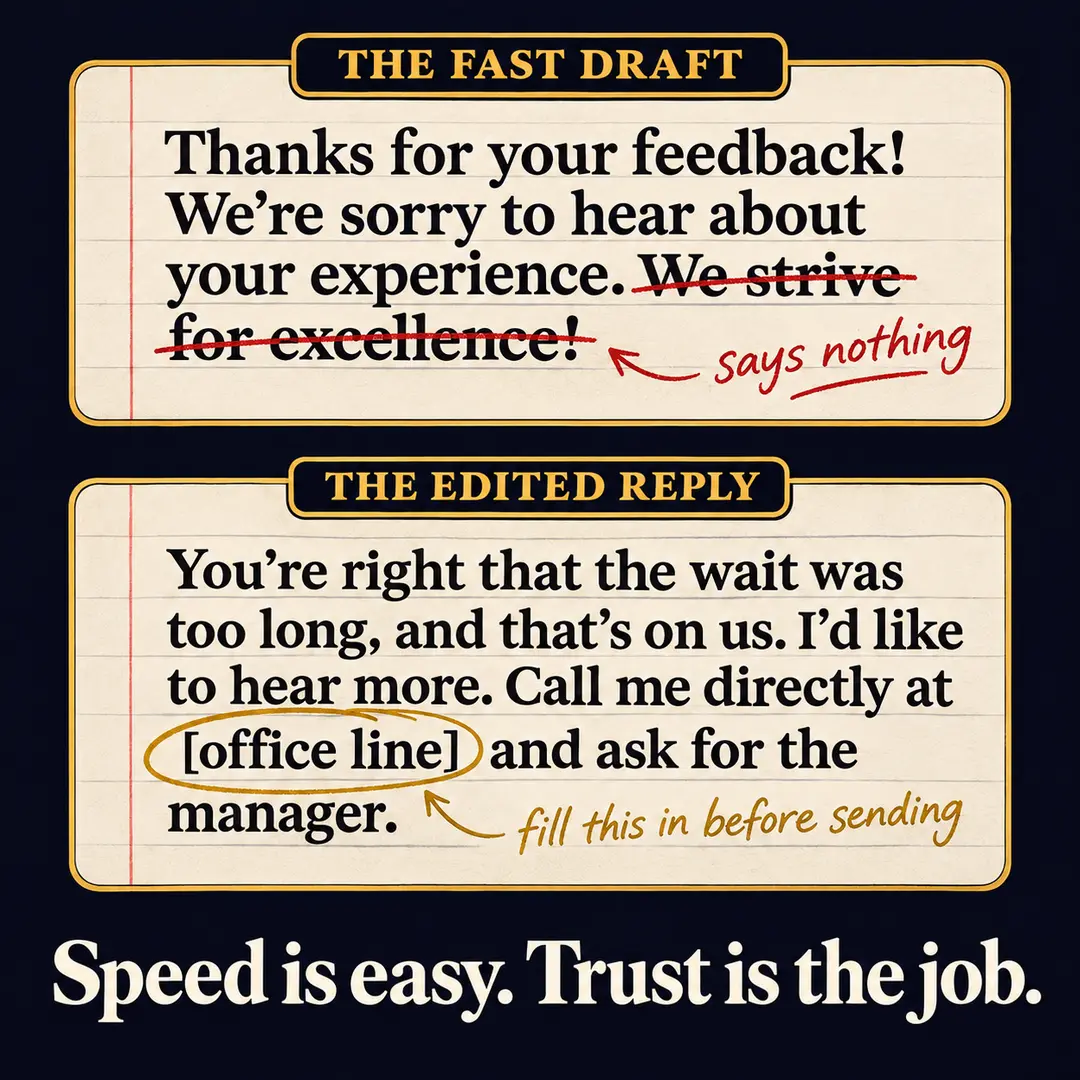
Look at the edited reply above. It is better, and it still isn’t ready, because “[office line]” is still sitting there. That is the kind of thing a person catches and a fast approve button doesn’t.
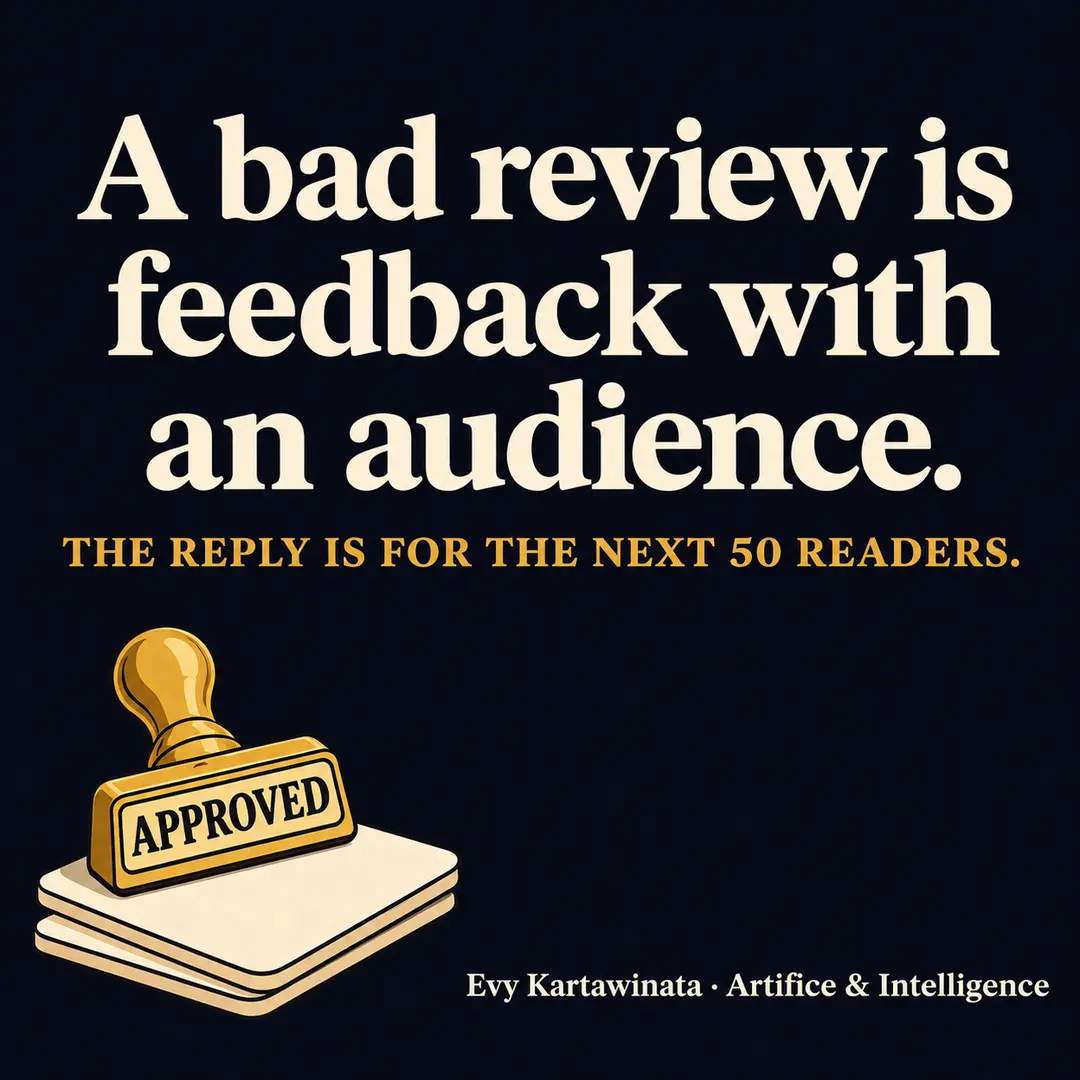
A bad review is feedback with an audience
The reply isn’t only for the reviewer. It is for the next person who reads it before deciding whether to call you.
Reviews also tell you something even when you reply well. In editing, I learned that if I keep correcting the same thing, the instructions are wrong, not the draft. Reviews work the same way. If the same complaint shows up twice, it is an operations problem, not a reply problem. Fix the wait time, the phone line or the handoff, and the reviews change too.
Where the tools help
For a lot of businesses, the hard part of reviews is keeping up, because reviews, comments and messages land in different places. With the inbox in one place, Claude can read what came in and draft a first reply.
We are exploring this now for a business with many locations that wants to answer Google reviews faster, with a person approving every response. The tool does the gathering and the first draft, and a person does the reading.
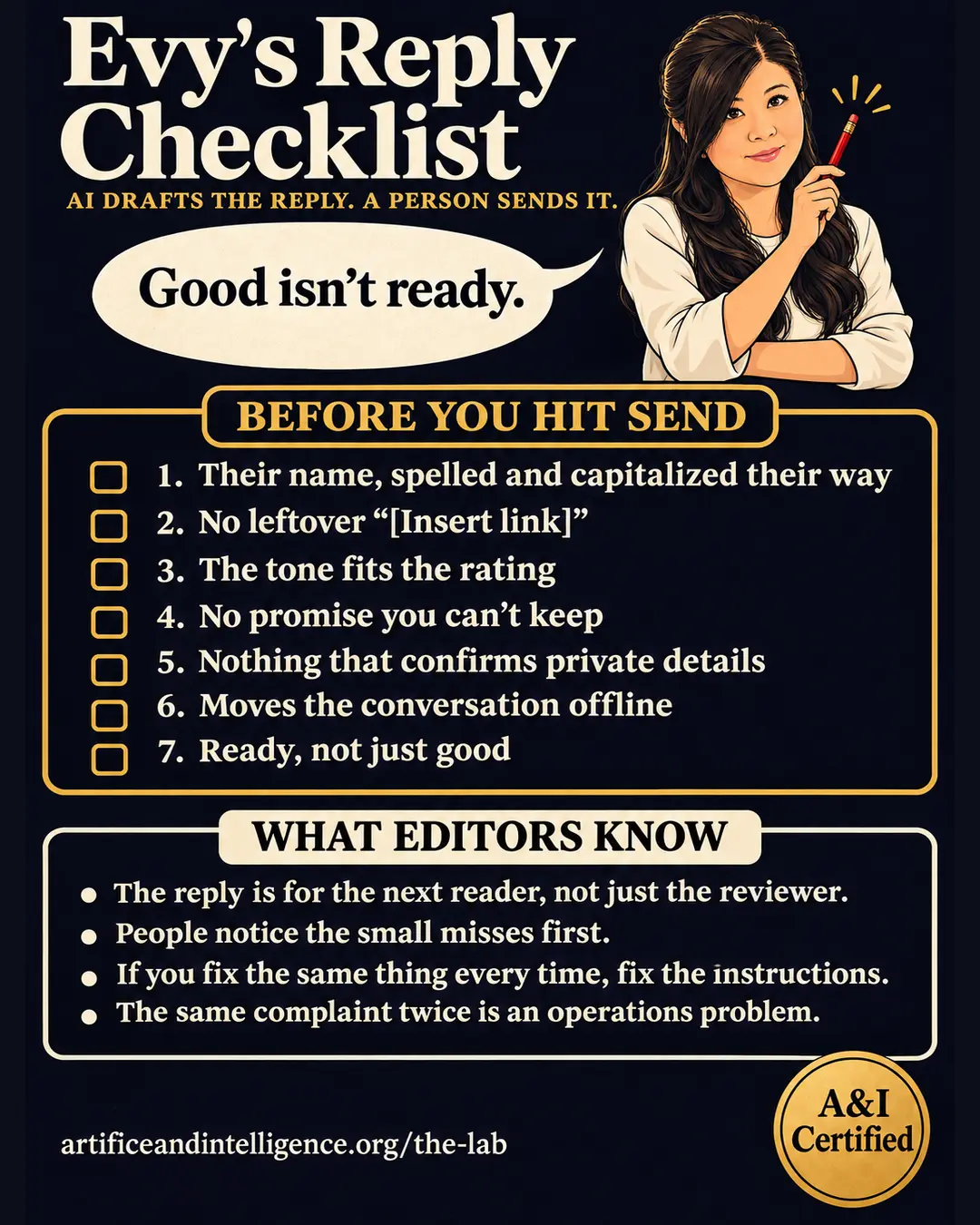
My checklist before any AI-drafted reply goes out
- Their name, spelled and capitalized their way. Partners notice a wrong capital letter first.
- No leftover “[Insert link]” or “[office line]” or any bracket at all.
- The tone fits the rating. A cheerful reply to a 1-star review reads like nobody read it.
- No promise you can’t keep. “This will never happen again” is a promise.
- Nothing that confirms private details. In healthcare especially, don’t confirm someone was a patient, even if they say they were.
- It moves the conversation offline with a real name or a real way to reach a person.
- Ready, not just good. Read it once more the way the reviewer will.
Questions people ask
Should I reply to every bad review?
Read it twice first, then decide whether it needs a reply, a fix or both.
Can AI write my review replies for me?
It can write the first draft fast. A person should still read and approve every reply before it posts, because the small misses are the ones reviewers and readers notice.
What if the same complaint keeps showing up?
Then the reply isn’t the problem. Look at what is happening in the business, like the wait time, the phone line or the handoff, and fix that.
AI can draft the reply. A person still has to send it. That isn’t a limit on the tool. It is the part of the job that builds trust. :)
Spell: The review reply
Paste it into Claude, ChatGPT or any AI tool you use. Fill in the brackets, read both drafts, and make the final call yourself. Paste three or four reviews at once to spot a complaint that repeats.
T · Summon
You are a careful editor who drafts replies to negative online reviews for a small business. You write plainly and warmly, and you never sound canned.

E · Divine
In 3 bullets or fewer, tell me what the reviewer is actually upset about. Don't wait for my reply.

A · Cast
Business: [name, what you do]
The review, word for word: [paste it, with the star rating]
What I know about what happened: [facts only, or "nothing yet"]
How a person can reach us privately: [a name and a phone number or email]

C · Ward
Spell the reviewer's name exactly as they wrote it. Match the tone to the rating. Make no promise we can't keep. Never confirm private details, and never confirm someone was a client or patient. Leave no placeholder in brackets. If you need a fact I didn't give you, ask instead of inventing it.

H · Inscribe
Two reply drafts under 80 words each: one short, one warmer. Then check each against this list: name, placeholders, tone, promises, privacy, moves offline, ready to send. Mark each pass or fix. If I pasted more than one review, add one line on any complaint that repeats. Then stop.
Written in TEACH, the method behind the A&I Spellbook.
Talk to A&I about a content or review workflow with editing built in, so replies get faster and a person still approves every one. To see the same tools on the scheduling side, read Lisa’s post on connecting our social media to Claude.
— Evy